

Handloom vs. Powerloom: The Ultimate Guide to Authentic Textiles
The distinction between machine-made and hand-woven fabrics lies primarily in their production methods. While both serve the textile industry, their characteristics differ greatly. Powerloom fabrics are mass-produced using electric looms. Consequently, they offer uniformity and affordability to the general public.
On the other hand, hand-woven fabrics are created manually. These textiles showcase unique patterns and textures that illustrate traditional craftsmanship. The slight irregularities in handmade cloth provide a specific charm. In contrast, factory-made fabrics guarantee a perfect, repetitive consistency. Because handmade textiles are rich in cultural heritage, they stand as a bold alternative to industrial efficiency.
Why Understanding the Difference Matters

In a world of fast fashion, distinguishing between these two methods is essential. Choosing handloom supports rural artisans and preserves ancient skills. Furthermore, hand-woven fabrics often have a lower carbon footprint. This guide will help you identify authentic handloom through various inspection techniques.
Checking the Borders (Selvage)
Additionally, you should always check the edges of the fabric. The borders of artisanal textiles are usually a bit rough or irregular. In comparison, the edges of machine-made fabrics are incredibly smooth and straight. This is because industrial looms use high-tension cutters to ensure a neat finish.
Feel and Texture

The “hand-feel” of a fabric tells a story about its creation.
The Artisan Touch
Hand-woven materials tend to be softer than their industrial counterparts. They possess a natural texture because the weaving process is delicate. Because the weaver applies manual pressure, the fibers remain more resilient and airy.
The Powerloom Feel
Conversely, powerloom fabrics can often feel rigid or stiff. The mechanical process is very precise and applies heavy pressure to the yarns. As a result, the fabric loses some of the “breathability” that characterizes hand-spun fibers.
Weight and Thickness
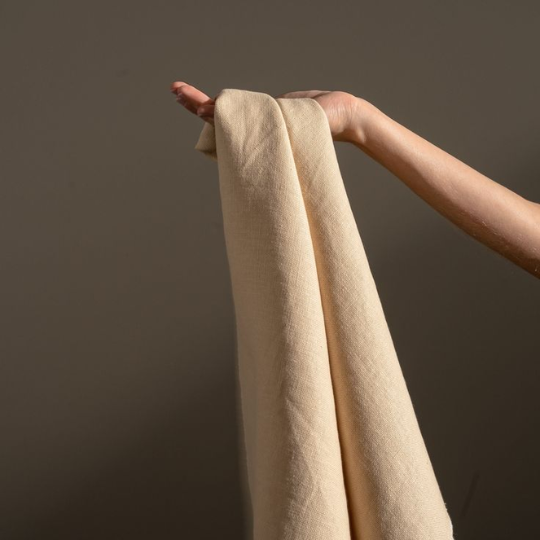
Weight is another key indicator of the production method used.
Hand-Woven Variations
In a hand-woven piece, you might notice slight variations in thickness throughout the material. One section may feel slightly denser than another. This occurs because the weaver’s rhythm changes naturally over time.
Industrial Uniformity
Meanwhile, a powerloom produces a fabric with a perfectly consistent weight. The machine ensures that every square inch has the exact same density. Therefore, if the weight feels suspiciously even across several meters, it is likely a factory product.
Thread Count and Yarn Quality

The quality of the yarn used often differs between these two categories.
Artisanal Yarn
Handloom fabrics often employ thicker, hand-spun yarns. Notably, the thread count might be lower than in factory-made versions. You may see “slubs,” which are small lumps in the thread. These are not defects; rather, they are evidence of the human touch.
Powerloom Precision
Alternatively, powerlooms use very fine, uniform yarns. This results in a higher thread count and a much smoother finish. Consequently, the final product looks polished but lacks the rustic character of handmade cloth.
Cultural and Regional Markers

Many regions are famous for specific hand-woven styles. For instance, the Banarasi Silk of Varanasi is world-renowned. Authentic artisanal products often carry cultural indicators. Specifically, look for Geographical Indication (GI) tags. These labels protect the intellectual property of traditional weavers. By purchasing items with these marks, you ensure that your money supports the actual community of origin.
Certifications and Labels

Labels are the most reliable way to verify authenticity. In India, for example, the “Handloom Mark” is used to certify genuine handmade textiles.
Always look for tags that explicitly state “Hand-Woven.” Many brands now provide QR codes. Moreover, these codes can often lead you back to the specific weaver or village where the fabric was made. Thus, transparency becomes a hallmark of quality.
The Burn Test: A Scientific Approach

Although not always recommended for safety reasons, a burn test can reveal fiber content.
Powerloom (Synthetic Blends): Many industrial fabrics use synthetic fibers to lower costs. Consequently, these will smell like burning plastic. They often melt into a hard, black bead instead of turning to ash.
Handloom (Natural Fibers): When you burn a small thread, it will smell like burnt paper or hair. It will also leave a fine, soft ash.
Weave Density and Breathability

The density of the weave provides another helpful clue. Handloom fabrics can show variations in how tightly the threads are packed. In some areas, the weave might appear slightly looser or more open.
In contrast, powerloom fabrics show a tight, regular weave throughout. Because handloom is less compressed, it is generally more breathable. This makes handmade cotton an excellent choice for hot climates, as it allows air to circulate more freely.
Irregularities as a Badge of Honor

One of the most defining traits of hand-woven fabric is its imperfection. Since humans are not machines, small variations in color and weave are common. However, these imperfections are what give the fabric its soul.
Powerloom fabrics are homogeneous. While this is efficient for mass production, it lacks the emotional connection of a handmade item. Ultimately, choosing handloom means embracing the beauty of the “imperfect.”
The Economic and Environmental Impact

Finally, we must consider the broader impact of our choices. Handloom weaving is the second-largest employer in rural India. By choosing these fabrics, you directly provide a livelihood for families.
Moreover, handlooms do not require electricity. This makes them a highly sustainable fashion choice. In summary, handloom is not just a fabric; it is a solution for a greener and more equitable future.
Summary Table: Handloom vs. Powerloom

| Feature | Handloom | Powerloom |
| Production | Manual / Foot Pedal | Electric / Automatic |
| Texture | Soft & Natural | Rigid & Uniform |
| Edges | Slightly Rough | Perfectly Smooth |
| Irregularities | Common (A sign of art) | Rare (A sign of defect) |
| Sustainability | High (No electricity) | Low (Industrial energy) |